|
| Bowl with Crocodiles, Prehistory, Naquada 1, c.3750-3650 BCE Jar with Boats, Prehistory, Naquada 1, c.3500-3300 BCE |
 |
| Upper part of a limestone false door Old Kingdom, 5th Dynasty, c.2435-2306 BCE Tomb of Neferenkhufu, Giza, Egypt |
 |
| Bronze mirror with falcons, New Kingdom, c.1539-1077 BCE Bronze mirror with Hathor handle, New Kingdom, c.1539-1077 BCE possibly Thebes, Egypt |
 |
| Wooden Senet game board, 18th-19th Dynasty, c.1539-1191 BCE |
 |
| Glass flask, 18th Dynasty, c.1390-1336 BCE Glass flask in the shape of a palm column, 722-332 BCE |
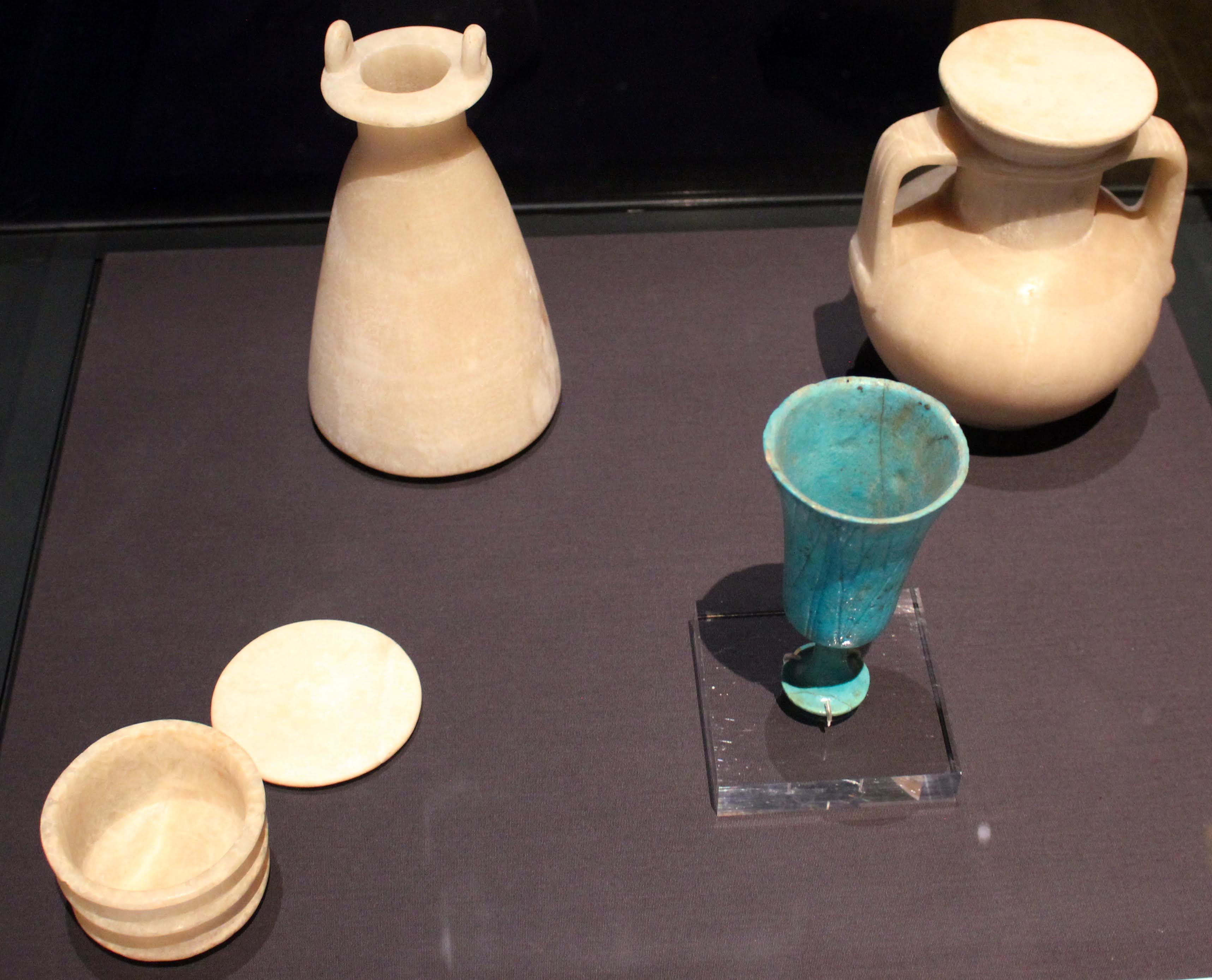 |
| Alabaster lidded cup, 18th-19th Dynasty, c.1425-1213 BCE Alabaster situla, New Kingdom, c.1539-1077 BCE Faience drinking cup, New Kingdom, c.1539-1077 BCE Alabaster amphora, New Kingdom, c.1539-1077 BCE |
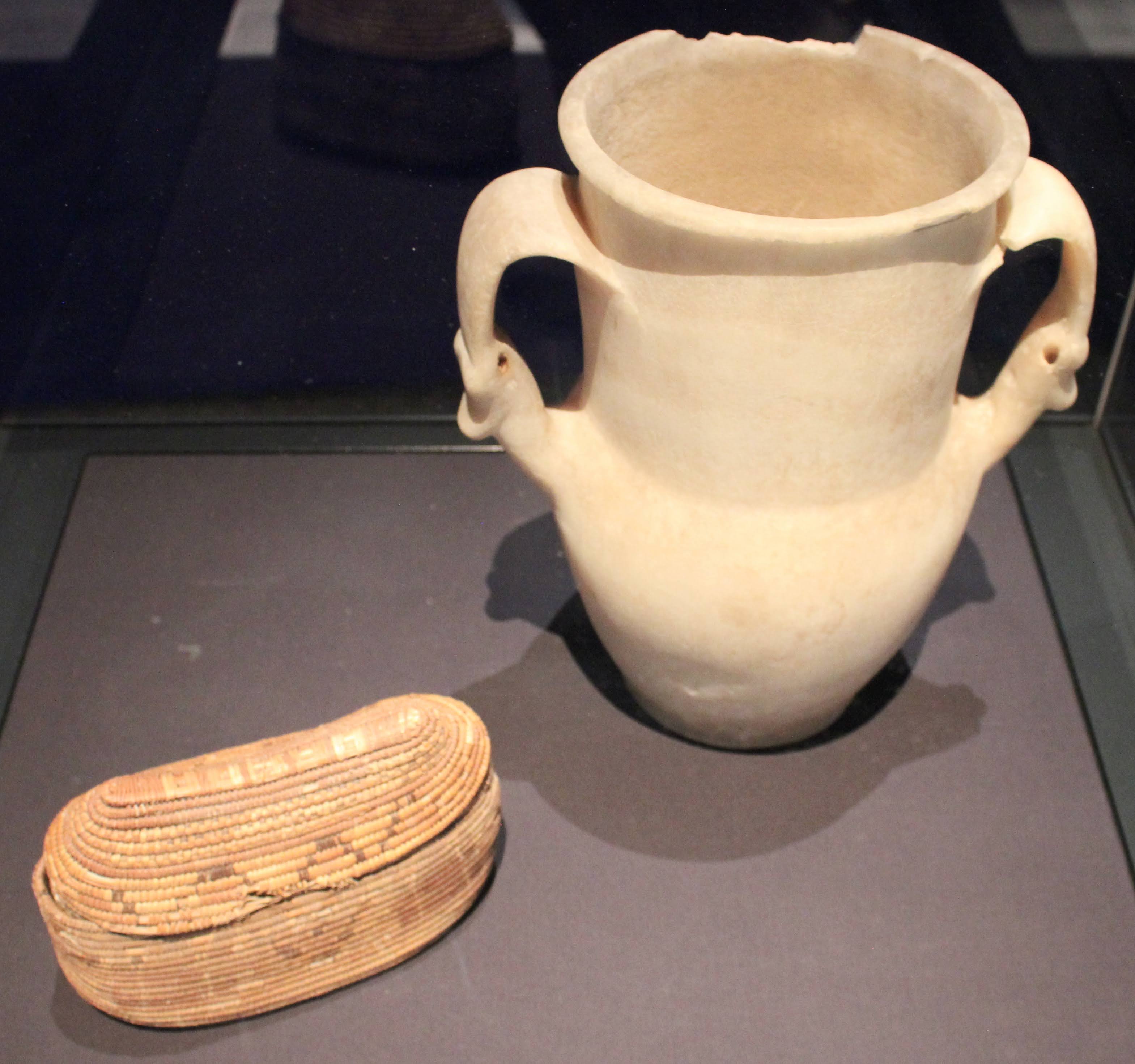 |
| Reed oval basket, New Kingdom, c. 1539-1293 BCE Alabaster ibex-handled vase, New Kingdom, c.1539-1077 BCE |
 |
| Limestone offering stela, 12th Dynasty, c.2080-1940 BCE |
 |
| Limestone offering stela of Khu and his family, Middle Kingdom, 12th Dynasty, c.1878-1843 BCE |
 |
| Mummified cat, 722 BCE or later Mummified falcon, Roman Period, 30 BCE-395 CE |
 |
| Mummified crocodile, Roman Period, 30 BCE-395 CE Mummified snake, Later Period to Graeco-Roman Period |
 |
| Mummified fish, Later Period to Graeco-Roman Period c.500 BCE-100 CE |
 |
| Bronze and wood Ibis, Late Period 722-332 BCE Bronze head and foot of an Ibis, Late Period 722-332 BCE Bronze human feet, Late Period 722-332 BCE |
Merry Christmas and Happy New Year for 2024 to everyone!
Last Friday afternoon we went to the National Museum of Australia's latest exhibition Discovering Ancient Egypt. This is a travelling exhibition, Collections from the Dutch National Museum of Antiquities in Leiden, open here in Canberra from 14 December 2023 to 8 September 2024. They are over 200 objects in the exhibition but some of my photos were too blurred to use and photos of some objects (the mummified bodies) were not permitted. Apologies for the quality of the photos, the reflective glass, lights and interactive displays make it hard to get decent photos. Even though we've visited many sites and museums in Egypt, including the Cairo Museum, we both really enjoyed it and would recommend a visit and the catalogue to anyone who is even vaguely interested in Ancient Egypt.
 |
| Clay moulds for Heron figure, Late Period to Ptolemaic Period, 722-30 BCE Clay mould for flower, New Kingdom to Late Period, 1539-332 BCE Clay mould for rosette, New Kingdom to Late Period, 1539-332 BCE Clay mould for Bes figure, Late Period to Ptolemaic Period, 722-30 BCE Bronze Bes figure, Late Period to Ptolemaic Period, 722-30 BCE Bronze Isis, Late Period, 722-332 BCE Bronze head of Neith, Late Period, 722-332 BCE Bronze left feather of the Atef-Crown of Osiris, Late Period, 722-332 BCE Bronze Isis Crown, Late Period, 722-332 BCE |
 |
| Bronze situla, Late Period, 722-332 BCE Wood statue dedicated to Amun, 19th Dynasty, c.1279-1191 BCE Bronze ship model, Late Period, 722-332 BCE |
 |
| Bronze priest statues, Late or Ptolemaic Period, c.722-30 BCE Bronze incense burner, New Kingdom, c.1300-1191 BCE Faience stela, 19th Dynasty, c.1292-1191 BC Bronze sistrum, Graeco-Roman Period, 332 BCE-1st century CE Bronze sistrum, Late Period, 722-332 BCE |
 |
| Bronze Isis with Horus on her lap, Late Period 722-332 BCE Bronze Harpokrates, Late Period 722-332 BCE Bronze falcon with a double crown, Late Period 722-332 BCE Soapstone Oxyrhynchus fish, Late New Kingdom, 1170-1150 BCE |
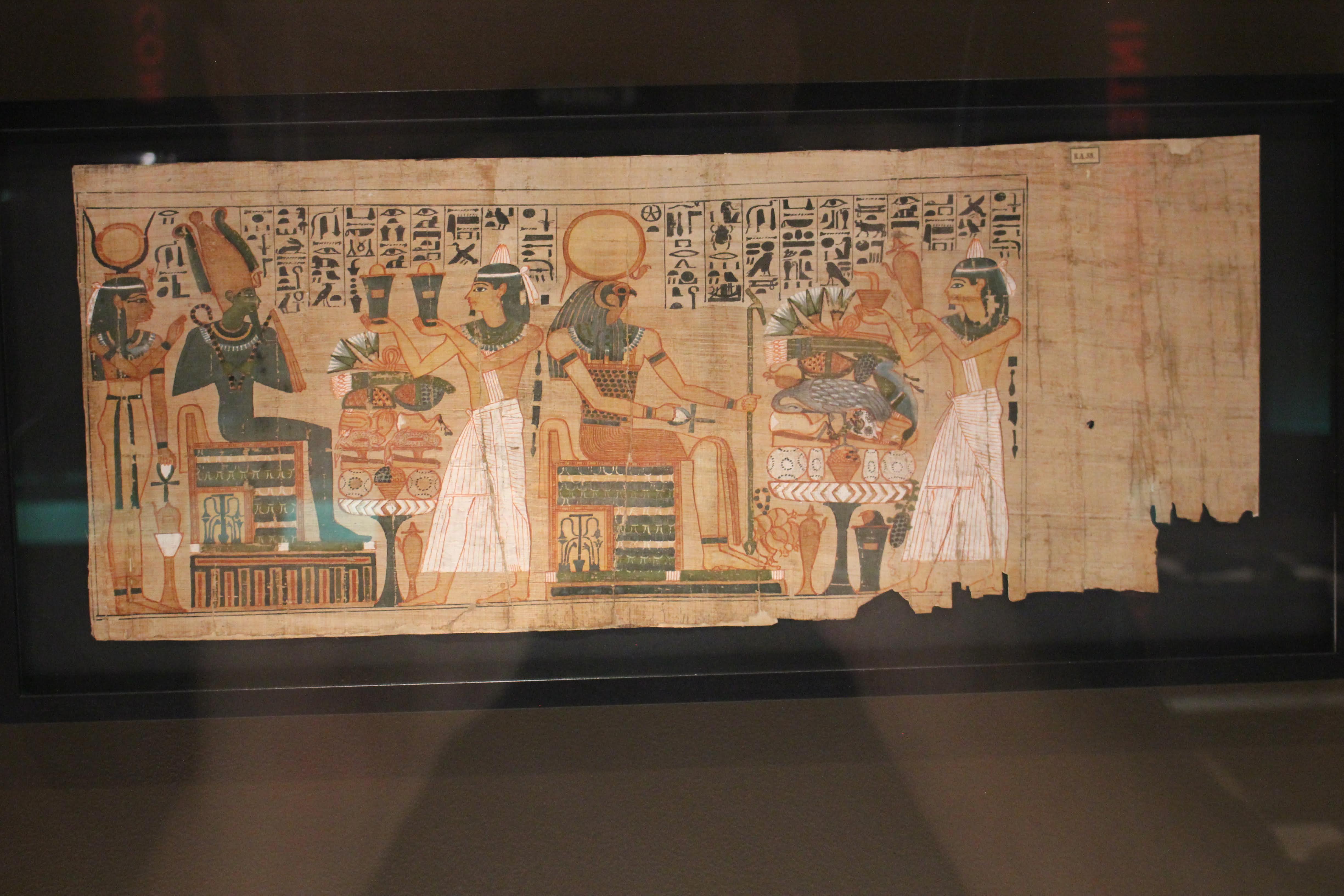 |
| Book of the Dead of Padikhonsu, 21st Dynasty, 1076-944 BCE |
 |
| Limestone stela of Egyptian gods, 18 Dynasty, c.1479-1324 BCE |
 |
| Bronze Ptah, Late Period, 722-332 BCE Bronze NefertemLate Period, 722-332 BCE Bronze Mut, Late Period, 722-332 BCE Bronze Montu, Late Period, 722-332 BCE Bronze Khonsu, Late Period, 722-332 BCE Bronze statue of a Ptolemaic king, Ptolemaic Period, 3rd century BCE |
 |
| Bronze statue, possibly of Hathor, Late Period, 722-332 BCE Bronze Thoth, Late Period, 722-332 BCE Bronze Bastet, Late Period, 722-332 BCE Bronze cat, Late Period, 722-332 BCE |
 |
| Bronze Ichneumon (mongoose), Late Period, 722-332 BCE Bronze divine statue with a snake head, Late Period, 722-332 BCE Bronze cobra, Late Period, 722-332 BCE |
 |
| Bronze bat, Late Period, 722-332 BCE Bronze scorpion, Late Period, 722-332 BCE Faience hedgehog, New Kingdom, 1539-1077 BCE Baboon figure, New Kingdom, 1539-1292 BC |
 |
| Limestone stela of Iuy-Kamose and Senebsen, Second Intermediate Period, 17th Dynasty, c.1540 BCE |
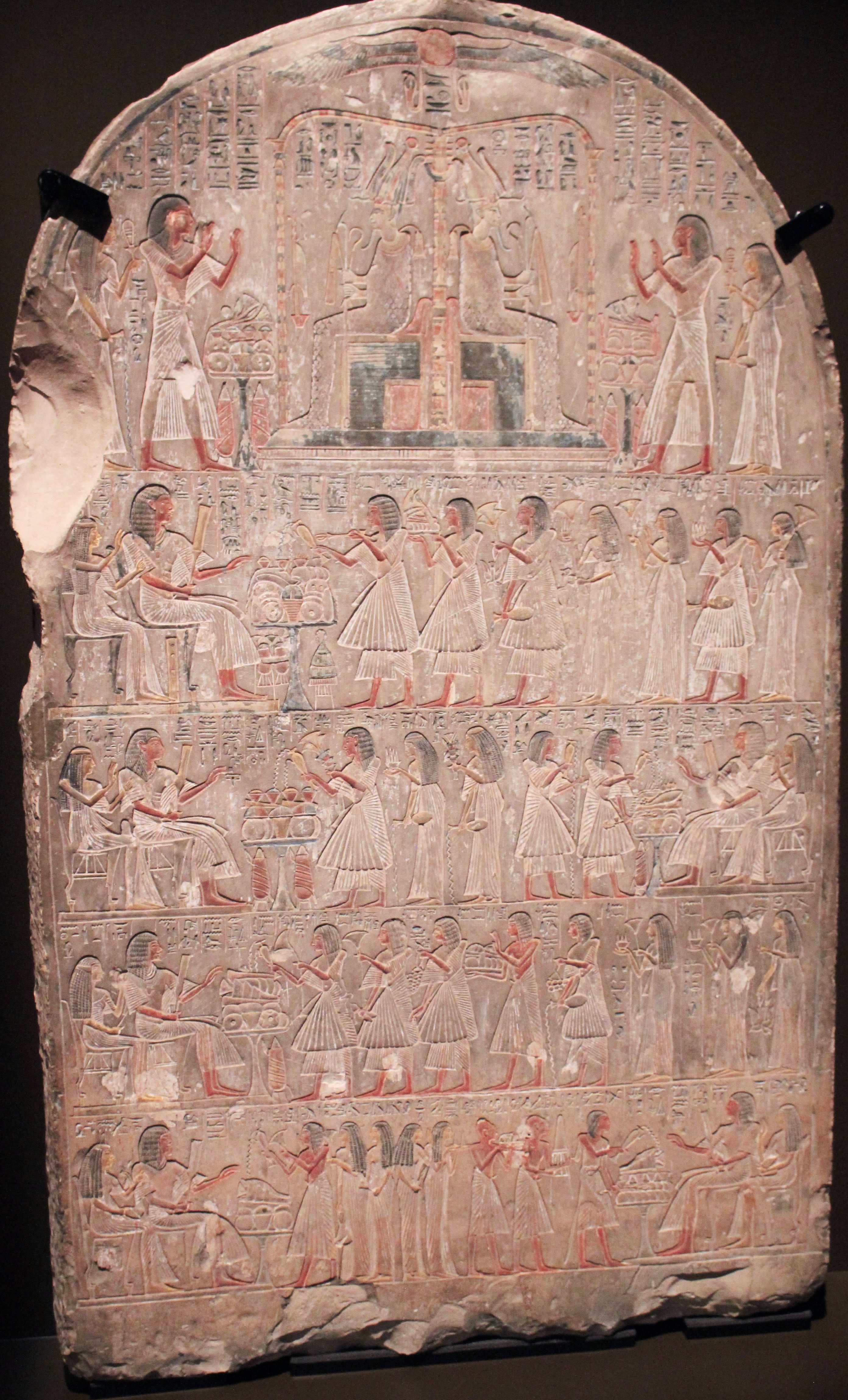 |
| Limestone family stela of Huy, New Kingdom, c.1539-1077 BCE |
 |
| Limestone stela of Djehuty, 19th Dynasty, c.1292-1191 BCE Saqqara |
 |
| Mythological Papyrus, Third Intermediate Period, c.1076-723 BCE |
 |
| Mythological Papyrus, Third Intermediate Period, c.1076-723 BCE |